
From Vienna to Strasbourg
On 8 October 2026, an conference marking the centenary of the First Pan-European Congress, entitled “From Vienna to Strasbourg”, was held at the Palace of Europe, the seat of the Council of Europe in Strasbourg.
The conference was organised by the French Committee of the Pan-European Union, the Association of Friends of the Council of Europe, the Pan-European Union of Germany and the International Pan-European Union.
The gathering brought together representatives of European institutions, politicians, diplomats, academics and civil society representatives to discuss the historical roots of the European idea, as well as the challenges and prospects facing the European project in the twenty-first century.
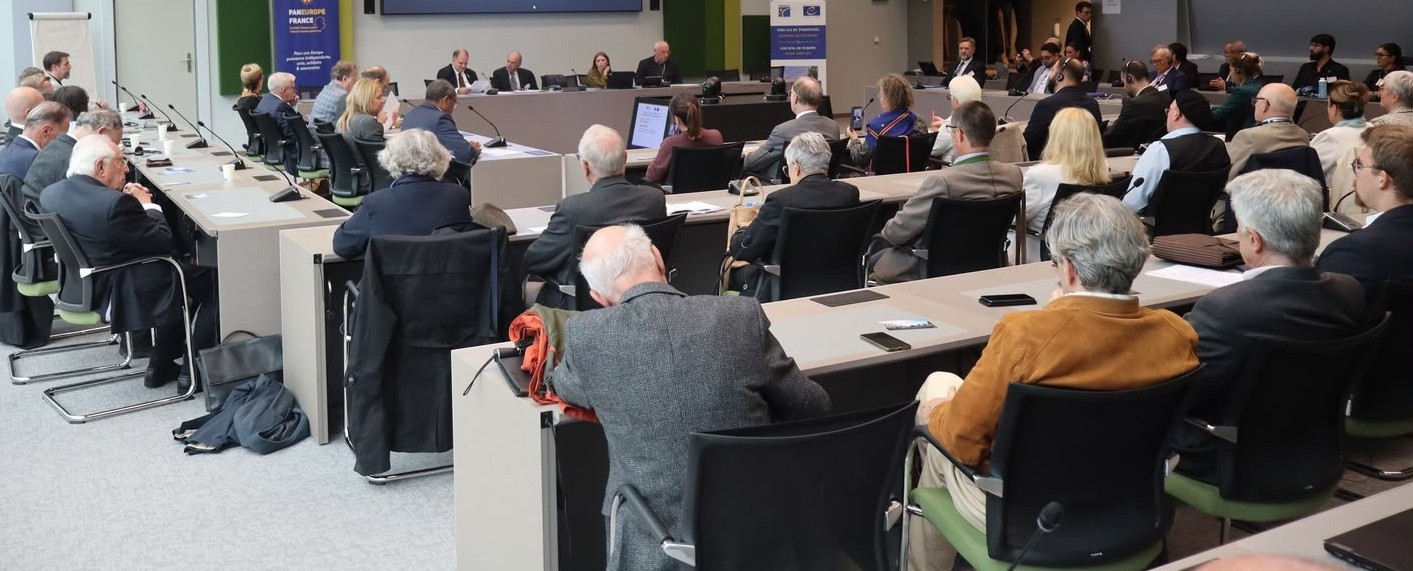
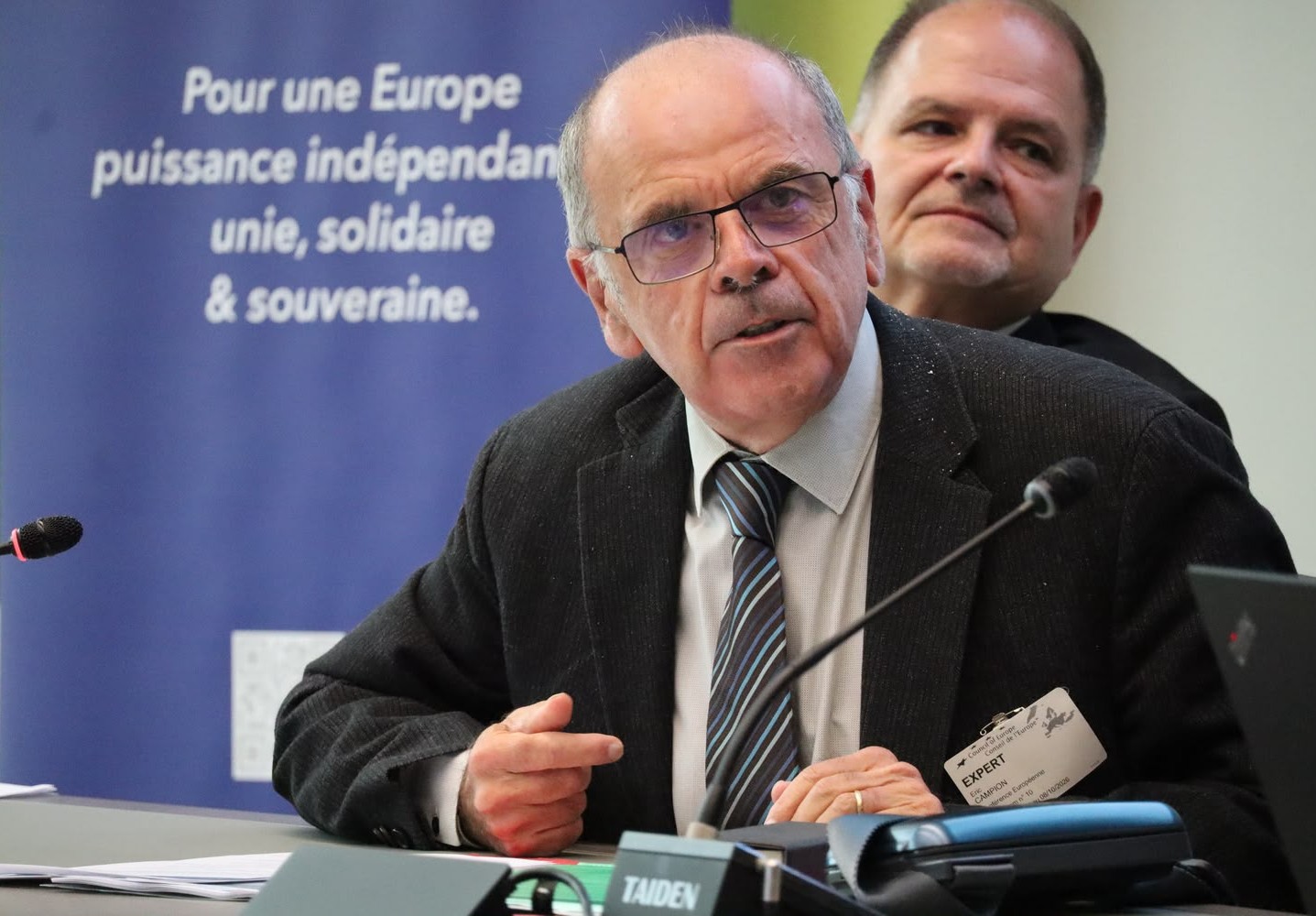
The opening speakers were Éric Campion, President of the French Pan-European Union and Vice-President of the International Pan-European Union; Andreas Raab, Vice-President of the German Pan-European Union; and Denis Huber, former diplomat and President of the Association of Friends of the Council of Europe.
In his address, Éric Campion emphasised that the strength of the European project rests above all on its fundamental values, foremost among them respect for the human person. He referred to the words of Pope Leo XIV during his recent visit to France and his tribute to Robert Schuman in Metz. Although these values are increasingly challenged and contested in the legislation of numerous European countries, the European project cannot be realised without them. They are the very foundation of our “magnificent humanity”.
Dubravka Šuica, European Commissioner, addressed the participants by video message.
Members of the European Parliament Michael Gahler and Fabienne Keller also took part in the programme.
“The situation is serious, but nothing is lost,” concluded Pap Ndiaye, Ambassador of France to the Council of Europe, in his address.
Pavo Barišić, President of the International Pan-European Unions, spoke about the opportunities offered by the present moment. Given the gravity of today’s circumstances, Europe has no alternative but to strengthen itself and become a global power, as envisaged and desired by Richard Coudenhove-Kalergi. He emphasised that the Pan-European Union was not merely one of the intellectual precursors of European unification, but also one of the driving forces behind it.
“European nations have indeed forged effective bonds and become a community of peace, freedom and cooperation. Peace was and remains the starting point of the Pan-European idea. Freedom is its central pillar. Yet freedom requires independence in decision-making, and independence, in turn, requires the capacity to defend freedom. That is why today we must speak not only of a strong and united Europe, but also of an independent and solidary Europe — a Europe capable of preserving peace at home and projecting its values of peace throughout the world,” Barišić said.
He also drew attention to the many challenges Europe faces today, stressing that history shows how Europe can grow stronger when confronted with common tasks. “If Europe finds the strength to act together, it can do more than merely react: it can shape its own future and contribute to peace, not only within its own borders but throughout the world,” Barišić declared.
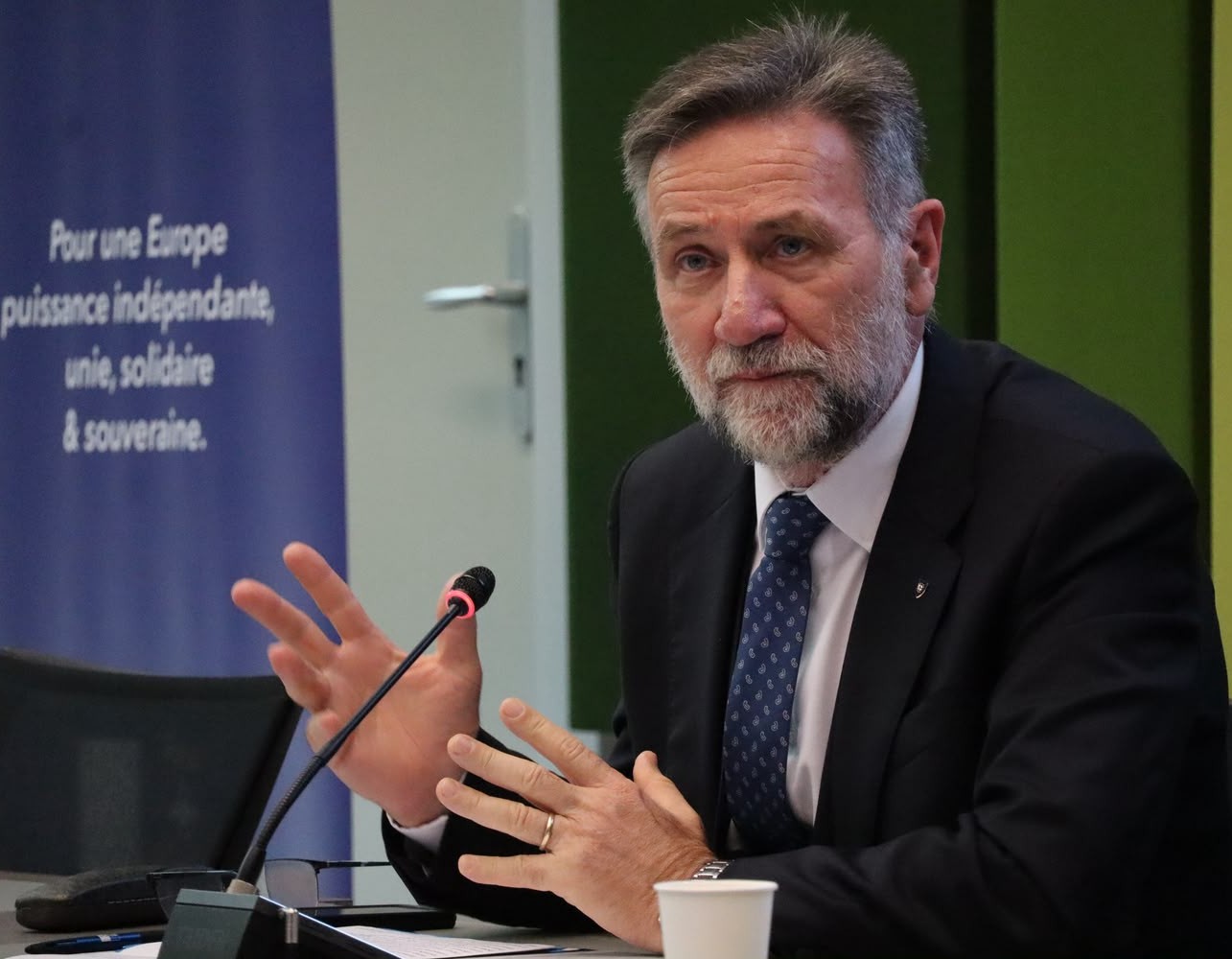
He also drew attention to the many challenges Europe faces today, stressing that history shows how Europe can grow stronger when confronted with common tasks. “If Europe finds the strength to act together, it can do more than merely react: it can shape its own future and contribute to peace, not only within its own borders but throughout the world,” Barišić declared.
Alain Terrenoire, Honorary President of the International Pan-European Union and the French Pan-European Union, delivered the concluding address in the discussion on the historical roots of the European idea. He recalled that, following the declaration of 9 May 1950 by French Foreign Minister Robert Schuman — whom the Catholic Church has declared Venerable and whom Pope Leo XIV paid tribute to in Metz — the process of European integration gained institutional momentum.
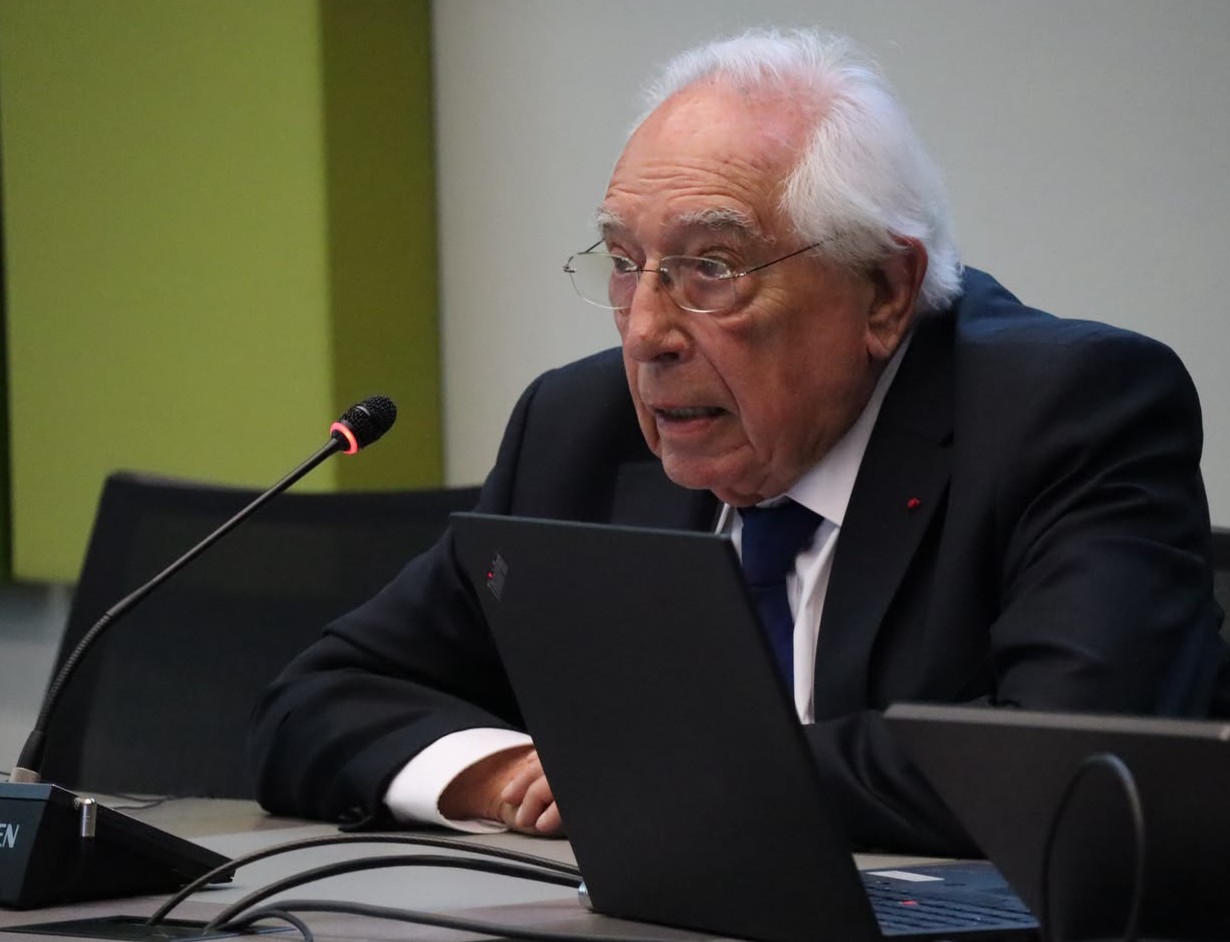
The new Europe that began to take shape after Schuman’s declaration, first through the establishment of the European Coal and Steel Community (ECSC) in 1951 and then the European Economic Community (EEC) in 1957, nevertheless remained closely tied to the United States. In the aftermath of the war, the United States had established a strong presence on the European continent and made a substantial contribution to its reconstruction.
As Alain Terrenoire explained, this orientation did not accord with Richard Coudenhove-Kalergi’s vision, as it distanced Europe from genuine independence. Coudenhove-Kalergi therefore forged links with General Charles de Gaulle and supported Franco-German rapprochement, formalised in the Élysée Treaty signed in 1963 by the French President and German Chancellor Konrad Adenauer.
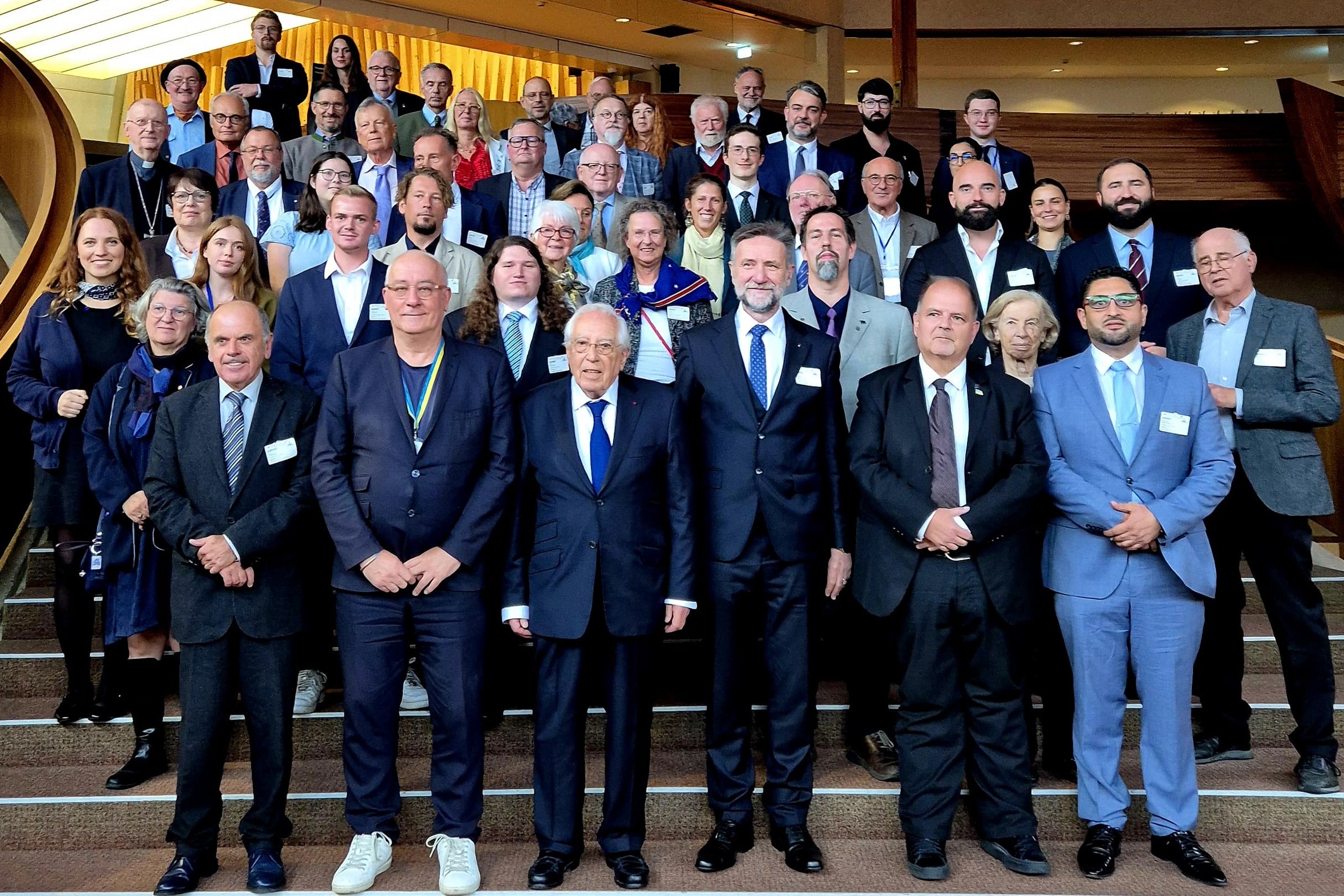
The centenary of the Vienna Pan-European Congress, which brought together more than 2,000 participants from across Europe in 1926, provided an opportunity to reflect on the historical development of the Pan-European movement and its contribution to shaping the idea of European unity. It also offered an occasion to consider Europe’s future, its strategic independence, political strength and role in international relations.
Programme (FR) (PDF)