
On Hybrid Threats in Toulon
The French Committee of the Pan-European Union organised its 6th Summer University in Toulon from 25 to 27 September 2026, under the theme ‘Hybrid Threats’.
Eric Campion, President of the French Pan-European Union and Vice-President of the International Pan-European Union, explained that, through this theme, Paneurope France was continuing to implement the programme set out in the resolution adopted in Strasbourg in 2025. The initiative forms part of a broader campaign to raise public awareness, prepare a white paper and establish a micro-credential scheme in cooperation with CNAM (the Conservatoire national des arts et métiers, France’s national institution for arts and crafts).
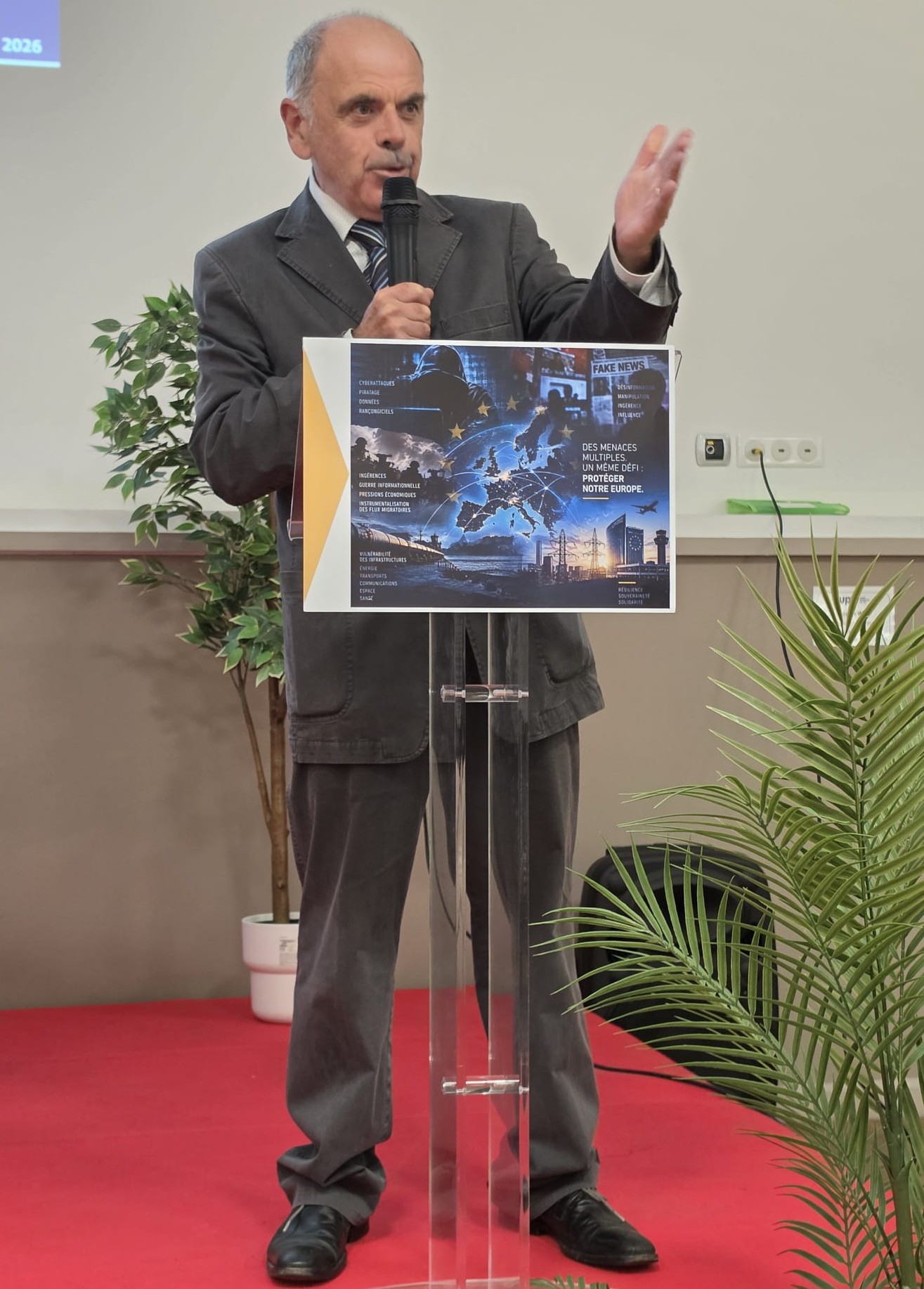
Through its programmes, Paneurope France encourages every member organisation to contribute to strengthening European sovereignty. The aim is to protect the population and promote collective security and stability. In this way, Pan-European organisations become active participants in the vision of Richard Coudenhove-Kalergi.
The opening presentations on the cyber resilience of supply networks, with particular emphasis on electricity supply, were delivered by distinguished university professors and experts Jean-Luc Thomas and Véronique Legrand. Jacques Yves Campion moderated the discussion.
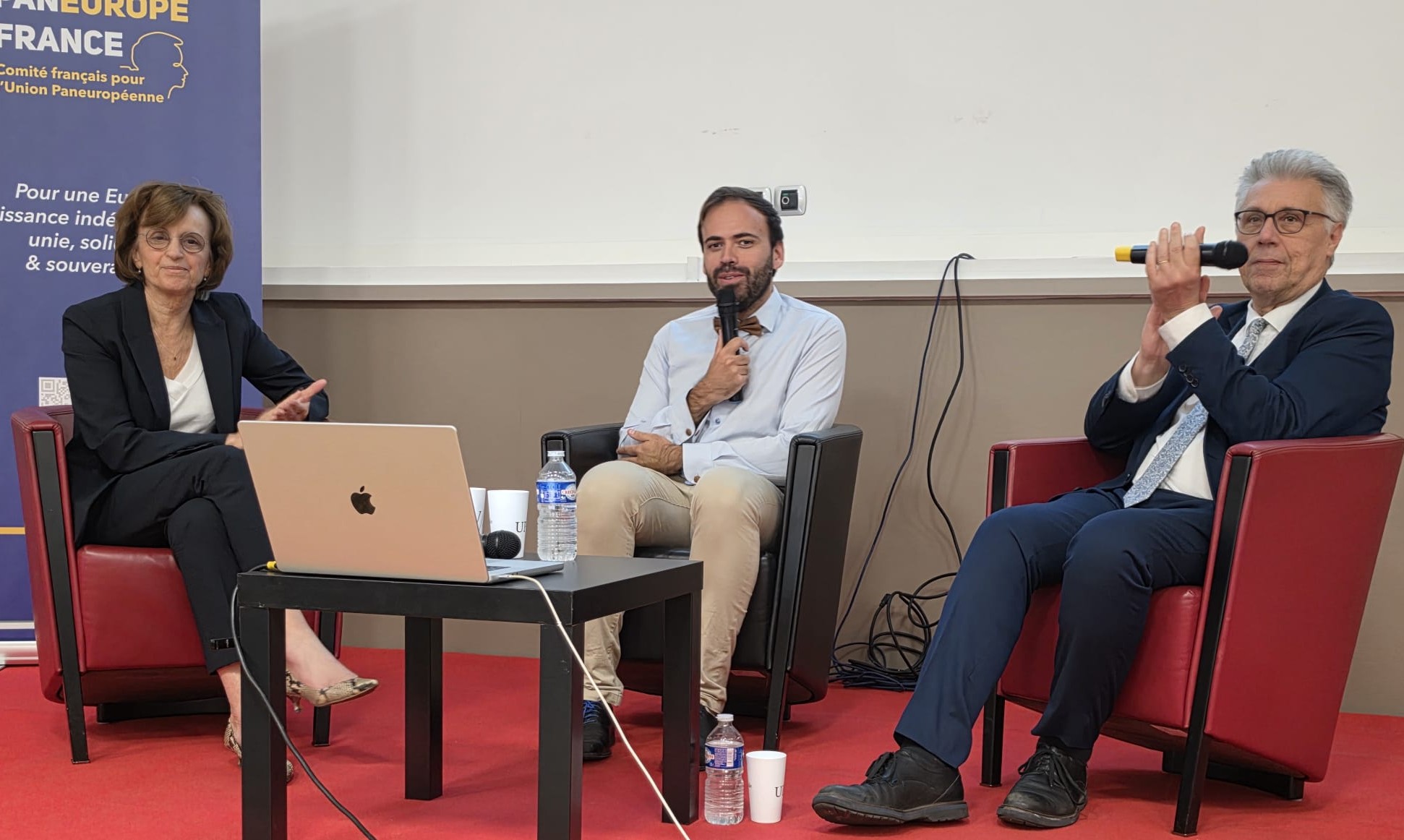
The discussions focused on physical sabotage, drone attacks, attacks on undersea cables, cyberattacks targeting water and electricity networks, disinformation, and the manipulation of legal and economic systems.
Admiral Paul Ausseur and Andrei Crigan from Moldova took part in a panel discussion on political powers and democratic resilience. They warned that multiple hybrid attacks were changing the balance of power and weakening the sovereignty of states, European sovereignty and the autonomy of organisations.
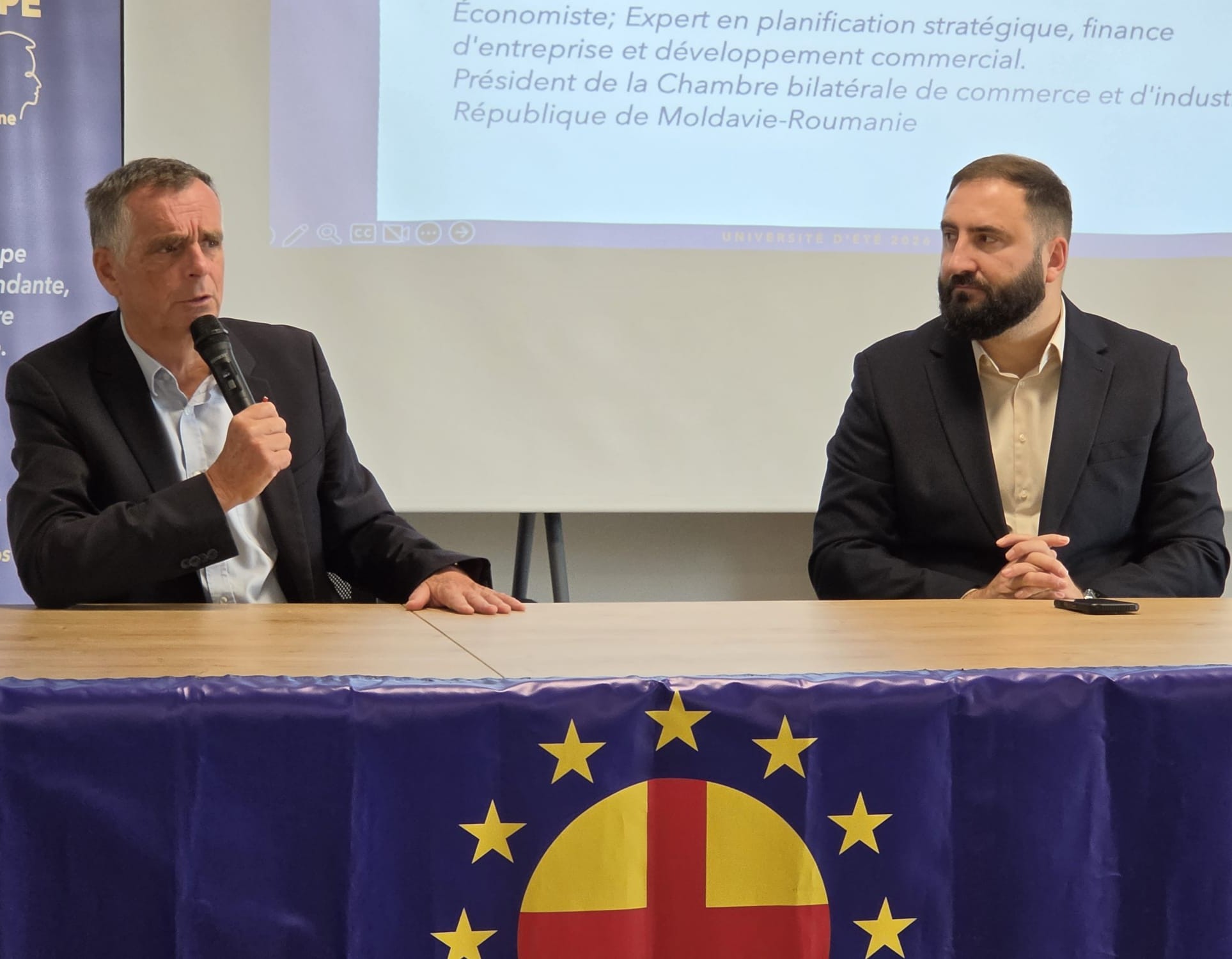
Faced with these risks, which have now taken on a systemic character, businesses, hospitals, airports, government agencies and organisations responsible for water and electricity supplies are on the front line in defending collective security and sovereignty. Hybrid threats are no longer confined to the military or state sphere.
Alain Terrenoire, Honorary President of the International Pan-European Union, spoke about the challenges Europe has faced amid the relentless rivalry between the great powers since the beginning of the twenty-first century. He stressed the need to stand up for an independent and strong Europe as a global power capable of defending peace and promoting the development of its Member States, in the spirit of the ideas of Richard Coudenhove-Kalergi and Charles de Gaulle.
In his address, Pavo Barišić, President of the International Pan-European Union, emphasised that the nature of security was changing rapidly. In the digital age, security issues extend beyond the traditional doctrines of territorial defence and the strengthening of military capabilities. He argued that hybrid threats change the means of conflict, but not the fundamental purpose of European policy: to protect peace, freedom, democracy and human dignity.
‘That is why it is particularly important today to nurture public trust and protect the space for public debate. Defence is no longer exclusively the responsibility of the military sector. Citizens are increasingly exposed to ideological pressure and disinformation. For this very reason, they are becoming the first line of defence of democratic society. At the same time, effective cybersecurity strategies must be developed, and the systems on which everyday life depends must be protected: energy sources, water supplies, communication systems and other critical infrastructure. All these can now be exposed to various forms of threat. It is therefore essential to raise awareness among decision-makers while systematically strengthening our capacity to identify, prevent and effectively counter cyber and hybrid threats.’
Concluding his address, Barišić stressed that the price of peace was too high for Europe to entrust its preservation to others. Europe has considerable economic and technological strength, but it also needs strategic clarity and the courage to take responsibility. The challenges are substantial, yet European history shows that confronting demanding tasks can make us stronger. If Europe finds the resolve to act together, it can do more than simply react: it can shape a shared future founded on peace, not only within its own borders but throughout the world. Barišić called for a stronger commitment to making the Pan-European vision a reality: a united, strong and independent Europe that advances its mission of peace on the international stage.
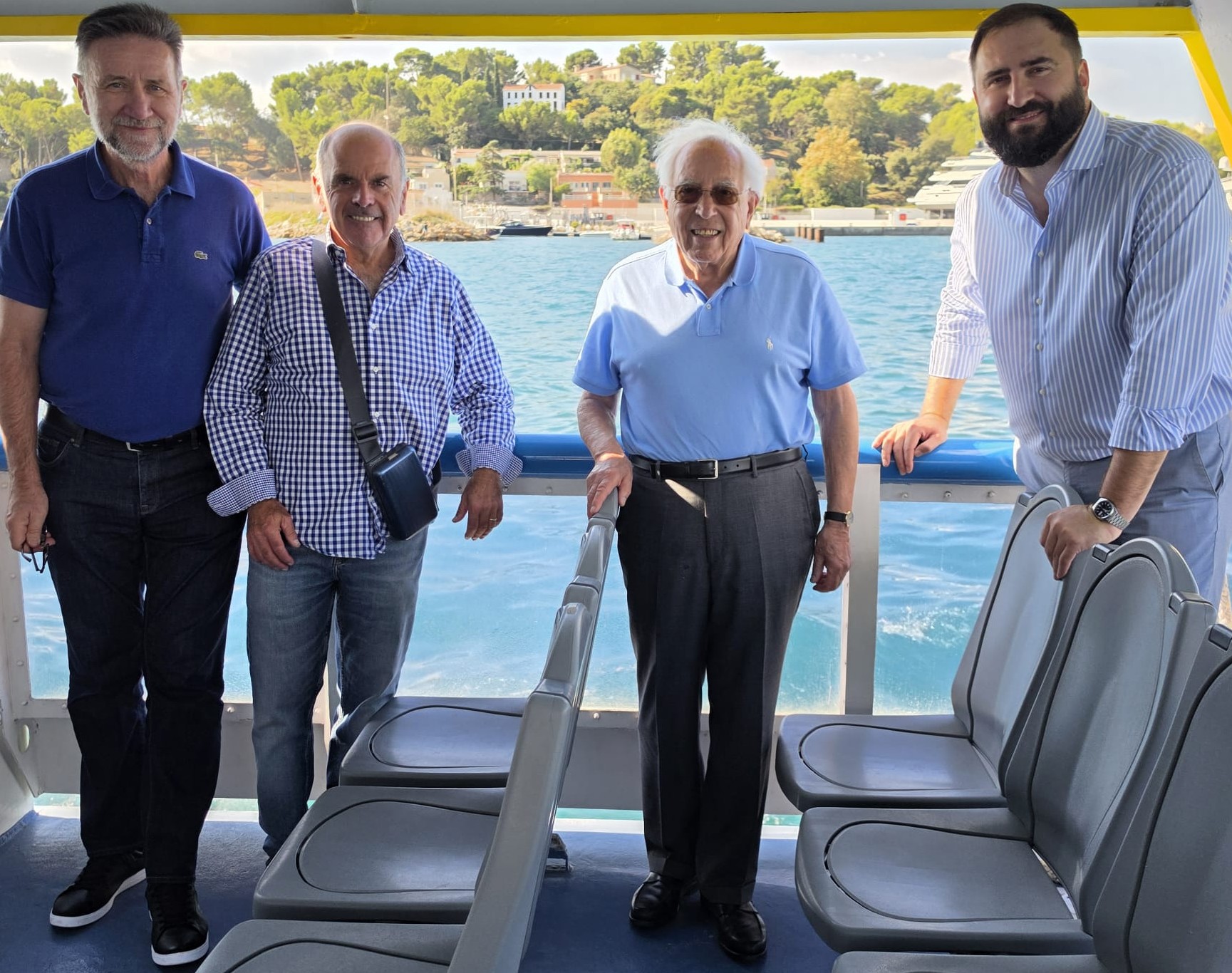
The Summer University programme concluded with a boat trip around Toulon’s naval harbour, where the nuclear-powered aircraft carrier Charles de Gaulle is stationed, followed by a visit to the city’s cultural landmarks.
Programme (FR) (PDF)